Tuesday, 26 June 2018

Trouble for changemakers in Africa

When I tried to get sponsors for my Masai Education Fund, a common reply I got was: 'It is great what you are doing but from my experiences with community conservation in Africa, I know how hard it is to change things, so thanks but no thanks.'

Myself and our village land committe during a land use mapping seminar.

While this did not stop me to pursue what I was doing, now that we are in the implementation phase of the project, I see the critics' point.


So why is it so hard to implement change in the local people's attitude to conservation?

First of all, I believe it is lack of education and foresight that makes people indifferent towards their future, indifference born out of ignorance. You cannot fear what you cannot see, so to say. When you tell the average person here in Tanzania (and this is probably true for other African countries too), to stop felling trees because it contributes to climate change and is unsustainable, they will look at you and tell you: 'But how am I meant to cook my food? I need firewood.' Or: 'I am felling these trees to make room to plant my crops so my children get something to eat'. 'And what is climate change anyway?'

What do you answer them?

Learning to read the land during our training at the Mara Training Centre in Kenya. 

Secondly, there is no such thing as a humanitarian in the most rural, poorest parts of Africa. What I mean by that, and I am being careful not to generalise here, is that compassion for your fellow human beings and a wish to better all your lives together as a community, is pretty much non-existent in rural Africa.

If I give our village here in the Masai Steppe as an example: I see here daily, how funds given to the village leaders as part of projects that are meant to eradicate poverty or go towards education or feeding school children, to name but a few, are not passed down to the people they are intended for. They disappear in the pockets of the people who receive them, leaders, who were chosen to look after their communities. But instead of caring for their fellow human beings and instead of showing empathy and a wish to move forward, they use the funds for their own personal gain.

How do you instill a wish to help others in someone, who simply does not have the heart?


The beautiful land I hope to protect with my Masai Education Fund. 

Thirdly, there is an element of fear that keeps those people who do wish to make a difference from speaking up. When I tell the Masai women here, who go out daily to collect firewood (only dry wood is supposed to be collected, no trees to be felled for firewood), why they do not chase away or apprehend the Swahili women from our neighbour village who go and fell big mature trees to put on their fires, they tell me that they are scared to do so and tell tales of how they were being snapped at or threatened on occasions that they did speak up.
Common replies are: 'What does it concern you?' 'You did not plant that tree!' 'Go away or I will make you!' While these are more modest examples, there are cases where people have openly been threatened with murder.

A culture worth preserving.

Another factor is one that is frowned upon or laughed at in the First world and that is the issue of witchcraft. I believe in all of sub-saharan Africa, this magic is practised and believed in and it is a common tool used in retaliation against someone who offended you or caused you harm in any way.

While we may not believe in it, many many Africans do and it scares them enough to not do what is right.

How do you tell people to stop fearing what they feared for centuries?


We are currently struggling to implement what we have learned through my Masai Education Fund and we are dealing with all of the above.
While it is definitely challenging and keeps me on my toes, it has not made me despair yet and I still believe that we can overcome these obstacles if we continue to talk and educate.

I have nothing but love for this beautiful tribe.

After all, we all only have this one life given to us and we might as well use the time we have to try and make the world a better place, even if it is difficult and feels like a fight. If you look at things with love, you never get tired 😊

Sunday, 3 June 2018

Masai wisdom

Eight years in Africa.

Eight years in the land of elephants, lions and giraffe. In the land of open plains and acacia trees, in the land of the Masai people, Samburu, Himba, Zulu and Mursi tribes.

In the land where you never say no, even though yes often seems insane. In the land where no one is ever on time but everything somehow has its order.

In the land where the most stunning sunsets are everyday business and where the moon rises like a big red sun and the stars cover more space than the dark.

Masai warriors parading at a ceremony

What have these eight years done to me? They have turned me upside down and shaken out all the dust, the fear, the doubt, the hate. They have left me standing with wide open eyes, ready to see everything anew. To see everything from a selfless angle of love. And one of my greatest teachers are the beautiful people I am so lucky to share my life with: the Masai.

They have taught me that tears are only cried for the dead and that any other tears are cried in anger rather than sadness. They have taught me that children are tellers of the truth and that they lift you out from the darkest corners of your soul.

Overlooking the stunning Masai Steppe 

They have taught me that it is rude to not accept gifts, even when they come from someone who has nothing. They have taught me that being still does not mean you are moving backwards,  but that it gives you time to reflect on your next move.

They have taught me happiness can be found anywhere and any day and that it is you who creates it, for yourself and others.

They have taught me that accepting each other's differences teaches you to accept not only those different to you but also yourself.

They have taught me that inviting strangers into your house leaves you feeling connected to the world and is nothing but basic decency.

They have taught me that laughter and stories are more important than big cars and designer jeans.

They have taught me that dirty, skinny kids are happier than ours could ever be and that it is OK to play with sand and sticks.

My husband and I.

They have taught me that family is everything and that sharing makes you rich.

They have taught me to live slower and with more purpose.

They have taught me to be patient and that detours make the journey memorable.

They have taught be to observe more and judge less.

They have made me softer and harder at the same time.

Warrior herding his cattle

They have turned me into the person who talks to strangers when passing them on the street, who gives a random child a sweet just to see it smile. They have turned me into someone who fears the coldness of the western world and who has stopped trying to explain to those who have never been to Africa.


Do YOU understand?

Wednesday, 16 May 2018

More of a woman

There are days where I am just bursting with inspiration and often this inspiration comes from the beautiful people I share my life with, but sometimes (and this has been the case recently) I struggle to pick up a pen and start writing.


Today though I feel like I have something to share with you again and this comes from my recent wish and desire to improve the lives of my fellow Masai women and mothers.

With my son Yannik in May 2016

As I am a mother. And I am so proud and happy that I have chosen to become one.

I remember a friend of mine once telling me, that she asked herself, after the birth of her first baby, why she had not done this earlier as it is the easiest thing she has ever done. I have to say I disagree. For me, it is not the easiest thing, it is quite possibly the hardest thing I have ever done, but as is so often the case with us humans, the hardest things, that we cannot imagine ourselves doing or accomplishing in life, turn out to be the best, most rewarding things at the same time.

I for my part feel that I am complete now, but by that I do not mean I am completely happy or completely fulfilled. On the contrary, having a child, has left me with a hunger and a need to DO more, to ACT more, to BE more. It has opened my eyes and my soul and has made me want to reach out and connect with the world to bring good to it. It has made me stand up and work towards a better future for my child.


A family snapshot with all the women. (Myself: back row, right)

So I am not complete, but I am completely happy in myself. I have learned to love and accept myself for who I am. When you see your body go from small to big and back and when you have had your life turned upside down and go back to normal within a couple of years, you understand really that there is nothing wether good or bad that lasts forever and that there is nothing to worry about or fear as there is nothing really that you cannot achieve if you put your mind to it.

I am more of a woman now and more of a person and I am so thankful that I have made it through the first two years of my child's life and have come out stronger.

A beautiful Masai women and her son.

If you are thinking of having a baby, if it is your heart's wish, then do it, because you will be just fine. And if you already have become a mother, then please share with me here, what you feel your baby has given you in life. Mine has given me confidence and purpose and the strongest desire to live life to the full as well as huge amounts of compassion towards my fellow women, wether mother or not.

Wishing all you beautiful ladies (and gentlemen) a beautiful day!

Sunday, 29 April 2018

Blood drinking warriors or freshly picked spinach - Masai diet

Masai diet traditionally used to consist of just milk, butter, forest fruits and roots and the occasional bit of meat and blood.

These days however, because of a changing environment and the effects it has on their cattle, milk has become as precious as gold to the Masai, and just as rare.

An increasing human population has encroached onto their wild spaces and has lead to a decrease in cattle rangelands. Nursing cows produce much less milk now, which barely suffices to feed their calves, let alone the Masai who depend on it.

A boiling pot of ugali simmering on an open fire in a Masai hut.

Due to this, the Masai have had to change their diet, away from lactose products, given to them by their cattle for free, towards corn and vegetables which have to be bought. This has also lead to large areas of rangelands being deforested for the sake of farmland, which has increased pressure on their pastoralist way of life.

Warriors these days spend most of the year away from home, working in cities and tourist places to earn money to be able to feed their families.

My sister-in-law taking a break from cooking ugali to nurse her son.

A traditional Masai meal today consists of ugali, a thick paste made out of corn flour boiled in water, eaten with milk or vegetables. Common vegetables here are potatoes, carrots, peppers, cabbage, tomatoes, spinach and beans. They are usually fried in oil and then cooked in a splash of milk. No spices are used, only salt.
Rice is available to be bought, but as its price is high, it is only eaten on special occasions, like ceremonies.
Even meat these days, has almost become a luxury item as goats or cows are only slaughtered when there is a need to feed many people, as for festivities.

Freshly picked pumpkin leaves to be cut up and cooked.

When a goat or cow is slaughtered it is butchered in a very efficient, almost professional way and is split between men and women.
Cows, goats and sheep each have designated parts that are given to warriors, old men and women and children.
The stomach of a goat is for the men to use in the traditional meat broth which has medicinal properties and is drunk by everyone who wishes to do so. The stomach of a sheep however is designated to the women, as is its hindquarters, whereas the lungs and the chest are for the uncircumcised boys. The girls get the back of a goat or sheep.
Blood is drunk straight from the carcass while it is being butchered. On other occasions, the vein of a goat or cow is tapped into with a bow and arrow or a needle and the blood is caught in a cup and mixed with goat or sheep oil or honey as a traditional remedy for injury or illess.

A warrior drinking blood from a freshly slaughtered goat.

The corn needed to cook ugali, has to be bought or planted and is therefore costly, as are vegetables and often both are not available in sufficient amounts to feed large Masai families. The Masai therefore often only eat ugali once a day and as a second meal, cook a simple porridge out of the corn flour mixed with milk and/or water.
Malnutrition is an issue prevalent in Masai country, but one that is yet to be addressed by a worldwide audience.

It is one of the many challenges I hope to address by continuously working with our community members through my Masai Education Fund. Teaching women and men to use family planning methods to reduce the number of children they put into the world so that they are able to take better care of them and reduce the pressure an increasing human population is putting on their rangelands, cattle and therefore on the survival of their beautiful culture.


I have received nothing but love and support by my friends and family and likewise by people who I have never met but who have taken an interest in my efforts to increase quality of life in Masai country - and I would like to say THANK YOU!

If you too, would like to know how you can help, please get in touch, so that we may work together towards a brighter future for one of Africa’s last remaining ancient tribes.

Monday, 9 April 2018

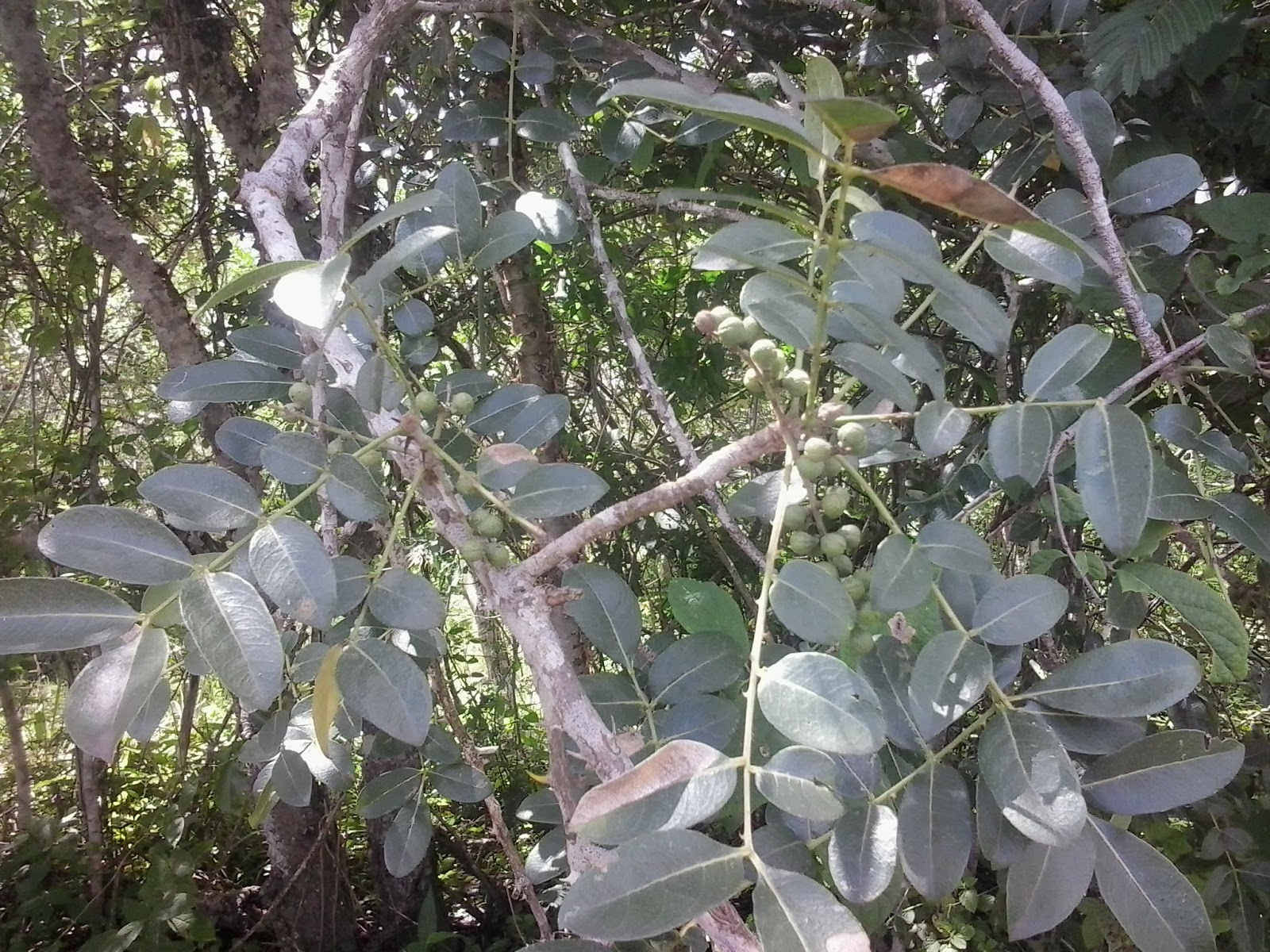
Traditional uses of the forest

Masai culture is ancient and lives on untill this day because of the Masai’s perseverance in trying to preserve it. Despite facing ever grater challenges in doing so and despite some of their customs and knowledge having been lost, their culture is to a large part intact and brings with it the fascinating art and knowledge of utilising what mother nature offers them.


Checking out the blossoms of an aloe vera plant in our boma

Today I would like to share with you, what little knowledge of the uses of the flora surrounding our Masai home, I have gained from my husband's tribe.

There is a tree called Esisteti which I call the toothbrush tree. Masai do not buy their toothbrushes in shops as we do, but break twigs of this tree which they use to clean their teeth. It prevents bad breath and keeps their teeth beauifully white.
The same tree is also used to cut the famous Masai sticks, with which they herd their cattle or defend themselves if need be.
The bark of this tree is also used as a remedy for stomach ailments.

The soft leaves of the Olmaroroi tree, or toilet paper tree.

Aloe vera, Olsukoroi in Maa, grows naturally all around us and is also said to be effective against stomach cramps when boiled up in water, aside from its well-known skin healing properties. It is also what Masai women use to stop their children from nursing when the time has come. Aloe vera sap is incredibly foul-tasting. When rubbing it onto your breasts, the child takes one lick and wants no more. It works - I have used this trick myself on my son Yannik.

Instead of using toilet paper, the Masai use the leaves of a tree which I call - wait for it - toilet paper tree, or in Maa Olmaroroi. The leaves are large and covered in fine soft hairs. A luxury item provided by nature and 100% biodegradable.

The oil-like sap of the Olhilihili tree has antibiotic properties and is used to treat superficial wounds like cuts and grazes.

The fruits of the Oloisuki tree have a pleasant lemon aroma and are used as spice in tea.

The Oloisuki tree and its fragrant fruits.

The well-known Ebony tree, famous for its strong black wood, is very common here and used to be a popular tree for fire making before its use was prohibited. It was also used for cleaning out the kibuyu, the dried out pumpkin shells in which the Masai store milk.

Ilshebellek carries edible fruit in August and is excellent smoke-free wood to put on your fire. Its flexible twigs also make great whips to use on the goats and sheep if need be.  

The bark of the Olkinaisho tree is boiled up and produces a red broth which is mixed with milk and given to new mothers. It is said to stimulate blood production.

The Ilgom tree produces small round edible fruits in June, with soft brown flesh, similar in taste to apples.


These are but some of the amazing trees and shrubs which produce an array of different fruits, bark and saps. There are plenty more but I will leave it here for today.

Thank you for reading and if there is any one aspect of Masai culture that you would like to hear more about, just drop me a message in the comment box below.

Sunday, 25 March 2018

Life as a woman

Today on the way from our boma to the village, I bumped into a group of women on their way back home from church. They invited me to come join them in the shade for a while.

We greeted one another and they asked about my son. To which I replied that he was doing fine. They then asked who was looking after him today as I had left him - to which I said that he is with my husband's cousin and his aunt.

Masai women dancing at a ceremony 

Then just as I was about to take my leave as Sokoine was waiting for me in the village, they asked me a question that I had heard a lot of times in the last six mobths: 'So has your son stopped nursing yet?!' To which I replied: 'Of course, quite a while ago!'

The women then burst out laughing saying 'Oh I see, so where is your baby belly?!?' Onto which I started laughing saying that I did not have one yet AGAIN! I took my leave and caught up with my husband Sokoine but this conversation stayed with me all day, as many do. It is particularly catching that this conversation happened while I am preparing to have a talk with the Masai women from our village about overpopulation and their role in it.

The way they see their role as women, all they have to do is have child after child after child. They usually nurse their children for two years - sometimes a little longer, sometimes a little less. And often the reason why they stop nursing, is because they are pregnant again. So a Masai woman gives birth every 2.5 to 3 years. Given that they are married very young and have their first child around the sweet age of 16, they often have 8 children in their lifetime or more.

My husband's cousin's wife with her boy.

I have been asking myself a lot why this is lately. And I came up with this:

It is lack of education and lack of choices and opportunities that leaves women to believe that there is nothing for them to do in this world apart from having babies. But it is also the influence of their mothers that puts an emphasis on having babies, rather than on getting an education.

How many girls in our village fail to attend secondary school because they fall pregnant in the middle of it? How many girls get married off when they are a mere 13 years old? Too young and too malnourished to even fall pregnant?

I ask myself what their mothers are thinking? Is it the 12 cattle that they want, that are being given to the father of the bride in exchange for marrying her? Is it, that they just don't know that there is another way?

It is these questions that I aim to address in our next village meeting this week as part of my Masai Education Fund which aims to tackle environmental and cultural challenges within the Masai tribe.

I have no idea how my talk will be received but I see a golden glimmer of hope in that I am well known in our village and that I have lived alongsid the Masai now for six years and have gained their trust.

All that I do, I do out of love for them, for their beautiful culture, for their kind souls and their ever smiling spirits and for the awe-inspiring wilderness they call home.

I hope this love will shine through and make our community back me in trying to provoke positive change for them.

Get in touch to find out more about my Masai Education Fund and find out about ways to support us!

Monday, 12 March 2018

Stephanie's Masai Education Fund

Sooooooo, I have left my beloved Tanzania and swapped it for Kenya for just a week!

Why? Because I say no to staying silent when I see things not going well. I say no to letting the tribe and people I have come to love be washed down the massive river called modernisation.

I say no to seeing wilderness be turned to desert and to let wildlife disappear.

During our first day of training at the Mara Training Centre 

This is why I have started my Masai Education Fund with which I have raised funds for our community leaders to be trained in land management and sustainable husbandry. This is why we are here at the amazing Mara Training Centre, Narok, Kenya.

It has been a challenge getting here and organising travel permits for everyone but it has been an AMAZING experience and one that has brought us even closer together and made us wiser and stronger in so many ways.

Our warrior leader Seperwa enjoying some time with the beautiful herd of Ankole cattle we were introduced to.

From being refused travel permits in Arusha and having to travel to our region's capital Babati to getting out huuuuuge amounts of cash under guard from our warrior leader ready to throw his club at anyone coming too close, to getting everyone safely across the border, to laughing at how bad Kenyan Swahili is compared to our Tanzanian one, to dodging traffic in Nairobi and finding a way to call home - all I feel is pride and happiness that we have made it here.
And the great thing is, we are just in the middle of it: Today we have completed our first day of training at the centre and have done the ground work to provoke change in our community starting at the social level.

Beautiful Ankole-Watusi cattle.

We have seen different breeds of cattle and different ways of keeping them, have walked in woodland where cattle and antelope graze side by side.

We have identified challenges and ways to overcome them. And more importantly, we have recognised what we want for our future, for the future of my husband's tribe and for our community.

I look forward to what the next fews days will bring and to getting back to our village of Lesoit in Tanzania to start on the long hard road to a place called change.